


If you’re living with a dog who destroys things around the house, ignores you outside, pulls and barks on walks, or just seems to add more stress to your day—I get it. I’ve been there. I remember how draining it felt to pour time, energy, and love into a dog and still feel frustrated, embarrassed, or defeated. I specialize in working with high-energy, “out of control” dogs—the ones that make us question where things went wrong and why their listening skills seem selective at best, especially at the most inconvenient times.
My training transforms chaos into clarity, turning dogs who feel unmanageable into genuinely enjoyable, cooperative companions—the kind of best friends owners always envisioned sharing their lives with.
Don’t just take my word for it—here’s what my clients have to say:
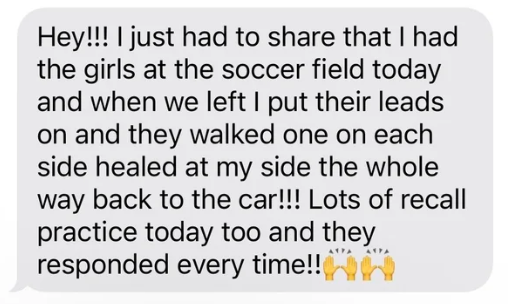
- Holly with 2 young female German Shepherd Dogs
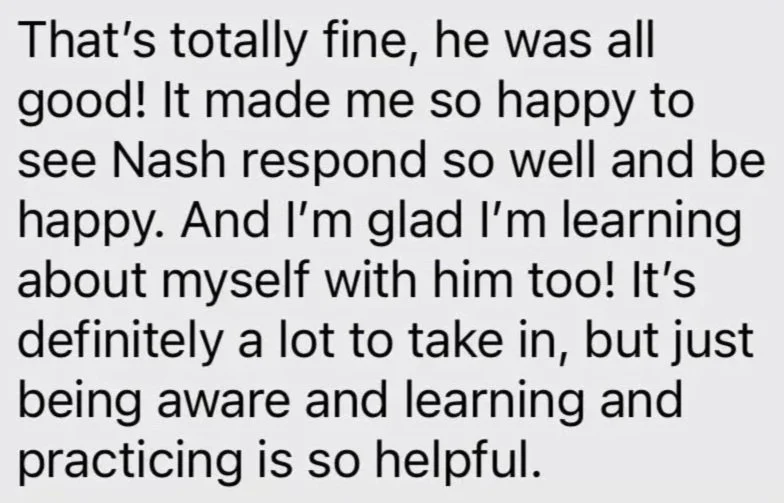
-Kylie with 9 month old Golden Retriever, Nash
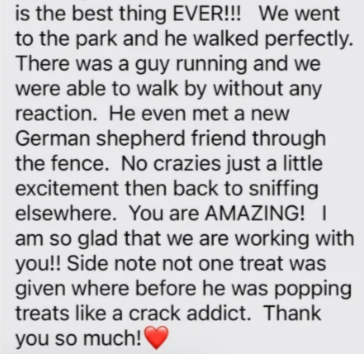
- Carole with 1 year old Doberman, Sniper

- Chris with a 2 yr. old Jack Russell rescue mix
Click the button above to answer a handful of questions. At the end, book a free phone call so we can talk more about you and your dog.
I see you, I feel your frustrations, I know I can help, and here’s why:
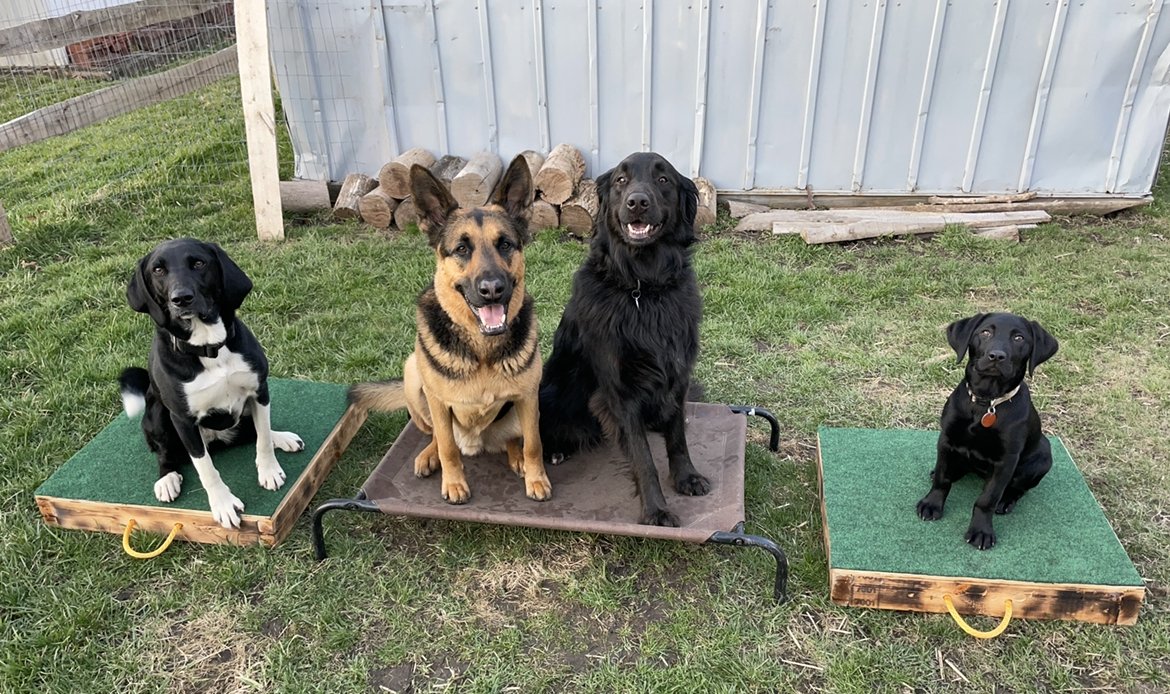
When I first tried solving my own problems back in 2018-2020, I remember feeling frustrated, confused and overwhelmed about what information was right or even worth trying to follow. My first 3 dogs all challenged me in their own unique ways, each helping me uncover different training skills and approaches.
I tried using treats for training, and while at first it seemed to work well, it eventually failed anywhere other than in my kitchen. I was at a loss. I sat on the fence between wanting my dog to listen but not wanting to use scary looking training tools for far too long. I tried to manage life’s distractions and hide them from the things that set them off, but it was incredibly stressful.
I struggled with my dogs being over-stimulated and unable to focus at group class, barking & pulling on leash, trying to bite me, attacking the window when people walked past, screeching in attempts to chase wildlife, and being too nervous to walk even one block from the house, handle loud noises, enter businesses, or meet new people. Socializing my puppies seemed impossible — they either freaked out at everything or were freaked out by anything. Somewhere in my efforts to fix these problems I stumbled upon Ivan Balabanov and his training.
I was mesmerized. His dogs weren’t just obedient and responsive—they were confident, engaged, happy, and eager to work with him. It didn’t look like typical training. The dogs were full of emotion and full of purpose—like they were proud of what they were doing and not just working for a “paycheck.” Somehow he was getting these results even with those scary training tools I was desperately afraid of using. After almost six years of trying what felt like every method imaginable, I invested in the Training Without Conflict Academy and haven’t looked back.
Once the online content was complete I flew to Florida for the written test. After passing, I advanced to the practical exam which required months of training sessions & hours of video evidence to be submitted. Since April of 2025, I’m proud to say I’m one of four dog trainers in Pennsylvania with his certification and the only one in Westmoreland county.
His school re-shaped how I see dogs. In retrospect, it’s a lot like teaching and coaching people. Nobody cares what you know until they know how much you care. My training now has a deep focus on understanding their emotions and motivations. It taught me to understand each dog as an individual, how they see the world, and what they need to thrive.
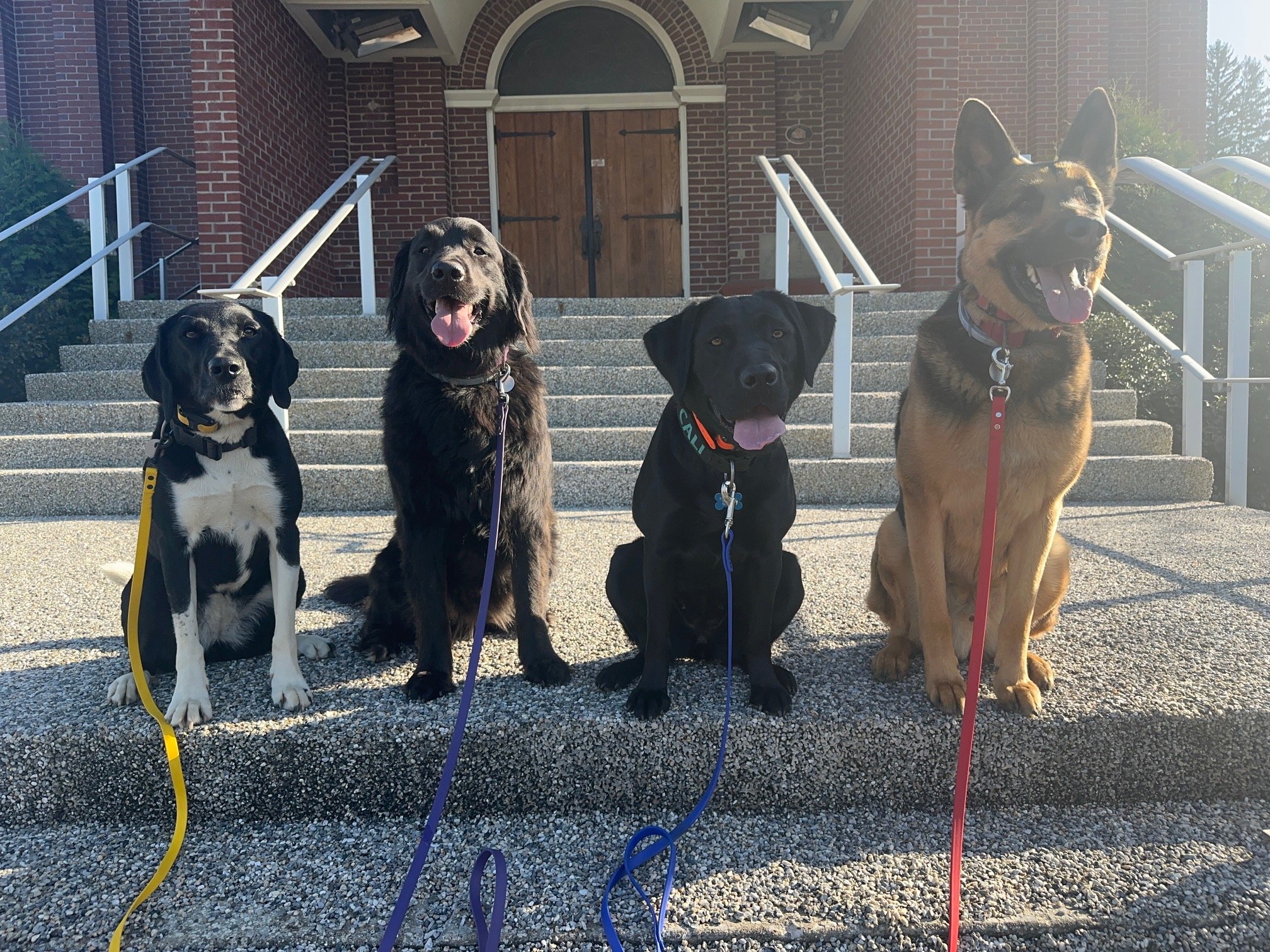
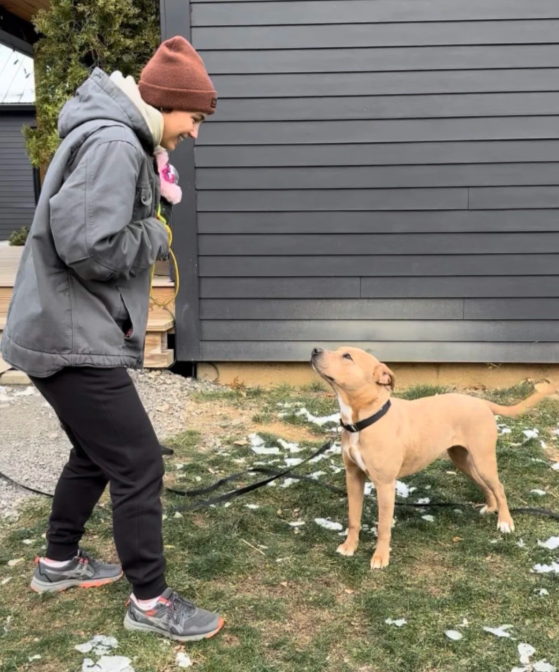
When this approach meets a committed and open-minded owner, a rare kind of partnership with their dog can be built—one rooted in trust, enjoyment, and a sense of ease that once seemed out of reach. At the end of your program, training won’t feel like work, it will simply feel like having fun with your best friend. I accomplish this through one on one sessions in the privacy of your home and in some cases virtual sessions. Click the button below to fill out some information, book a call at the end, and see what approach would be best for you.











A hard truth
If you’re looking for minimal work and maximal results, this won’t work. There are plenty of dog trainers that will simply address the issue you’re having at the surface but never undercover why it’s happening. Many of them are unfairly hard on dogs and diminish their personality. I’m not one of them.
Dogs NEED ways to express themselves and often that means changing what you do or how you do it. It also means reframing what you think they need for what they actually need. It means being open minded and understanding dogs are all incredibly different and just because your previous dog was great, doesn’t mean this one is going to fit that same mold.
I help owners build an irreplaceable bond with their dog. One that goes far beyond a spoiled life of treats, toys, and cuddles and taps into things they need to thrive. Spoiler alert, it’s not more toys (trust me I know—been there, tried that). At the end of our program your dog will look to you as a leader and be happy to listen to you and work WITH you. But only if it’s done right, which is why I want to make sure we are a good fit.
Dogs NEED meaningful interactions. They need someone emotionally invested, not a cold, robotic series instructions trying to suck the enthusiasm out of them. Once you learn how to tap into their natural desires, show them you’re on their team, and convince them you know best, your dog will thrive and the problems will start to melt away. Together we’ll work to give your dog a PURPOSE. Although very domesticated at this point, our dogs are still predators on a genetic level, meaning their natural motivations need outlets — and food puzzles and enrichment toys aren’t going to cut it.
My training celebrates your dog's wild and crazy side while teaching them to listen. I compare it to putting an angry kid in sparring sports for anger management. The sports give the kid a constructive outlet for the frustrations and tensions in life. I use games and play to teach similar concepts. You wouldn’t try to teach an angry child to never get mad… so I’m not interested in teaching an excitable dog how to just be calm. Instead I teach them to be wild & crazy when it’s appropriate, listen in the face of excitement/distractions, and learn how to stop doing things you don’t like.
There are a lot of things to take into consideration when I accept clients into my training programs. Having the ability to get the dogs outside to run and sniff and play are musts. Dogs that aren’t getting proper exercise and outlets to fulfill their biological needs cannot function long term without issues, period.
You have to be willing to explore with them in nature, get on the ground with them, learn what THEY like, have the patience to teach them HOW to play, and most importantly you must forget the idea of what you think your dog SHOULD be. You also have to be willing to tell the dog when it’s wrong, apply a consequence, and show it how to be right.
If you’re not willing to learn a new way and you can’t dedicate the necessary time more days than not, this won’t work. For some dogs it could be as little as 15-30 minutes a day, but those minutes need to be purposeful, like how I teach you… not mindless or preoccupied while scrolling social media or watching TV. They notice and it makes a difference, I promise. The amount of time and the intensity varies with each dog.
If you’ve made it this far, there’s no hiding that I use prong collars and electric “shock” collars (in some cases, not all). I use plenty of rewards as well, but I don’t shy away from using a training tool that is both effective and efficient. Too often trainers ONLY use treats or toys. These dogs can become neurotic constantly searching for how to get the reward. Not to mention it can be tricky to fade out the use of the treats, leaving most owners to bribe their dogs, and that ultimately end up with a dog that doesn’t listen without a treat.
We live in a world where saying “no” is filled with so much baggage and even worse, follow through is almost unheard of. This is a people problem. Dogs do NOT see issues with negative consequences. It is hard wired into their DNA. Avoiding something unpleasant is the most important rule to staying alive (for them and us). Training is SO much clearer to dogs when both sides of the spectrum are used. A one sided approach leads to issues down the road and at the very least, much more time and money spent on training.
The issue lies in people thinking “no, negative consequences, and punishment” are all synonymous with mistreating and abusing dogs. This couldn’t be farther from the truth and is perpetuated by people who lack education on the topic. Social media is the quick “how to” guide for everything these days and it’s littered with well meaning trainers spreading absolute false information. I know this because I followed these methods for too long before I invested in the TWC certification course.
Although I do not train dogs full time, I am confident I’ve invested more into my education than many others who do train full time. I invested a lot because to me, dogs mean a lot—each and every one of them. And I want to do right by them and for them, all so the owners can live an enjoyable, peaceful life with them.